Overview #
Vented loops are an important component of the plumbing systems installed aboard Ocean Alexander yachts. These devices are designed to prevent unwanted siphoning, maintain proper system operation, and ensure reliable water flow throughout various onboard plumbing applications.
Routine inspection and preventative maintenance of vented loops help reduce the risk of:
- Blockages.
- Reduced water flow.
- Improper venting.
- Odor issues.
- System performance problems.
Regular cleaning and inspection should be incorporated into the vessel’s preventative maintenance program.
Materials Required #
Before beginning maintenance, gather the following:
- Bucket or collection container.
- Cleaning brush or pipe brush.
- Mild dish soap or approved marine-safe cleaner.
- Fresh water supply or hose.
- Gloves.
- Towels or rags.
- Flashlight.
- Plumber’s snake or drain auger (if required).
Vented Loop Cleaning Procedure #
1. Isolate the System #
Before servicing:
- Identify the plumbing system connected to the vented loop.
- Turn off the associated water supply or system pump.
- Ensure the area is protected from water discharge.
- Place towels or a container beneath the vented loop.
This prevents accidental flooding and allows safe access for cleaning.
2. Locate the Vented Loop #
Vented loops are typically installed in plumbing systems where preventing backflow or siphoning is required.
Common locations may include:
- Sanitation systems.
- Raw water circuits.
- Engine or generator cooling systems.
- Other onboard plumbing applications.
Locate the vented loop and identify:
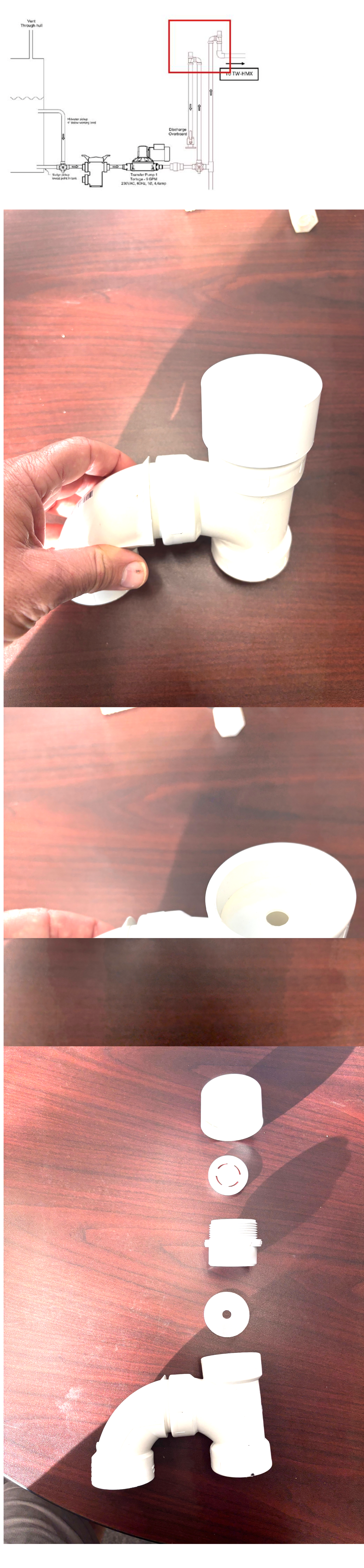
- Loop body.
- Vent fitting.
- Access or service cap (if equipped).
3. Remove the Access Cap #
If equipped with a removable clean-out cap:
- Carefully remove the cap using the appropriate tool.
- Place the cap and any seals in a clean location.
- Inspect the cap and sealing surface for damage.
Avoid damaging threads or sealing components during removal.
4. Inspect for Debris or Blockages #
Using a flashlight, inspect the interior of the vented loop.
Look for:
- Mineral buildup.
- Salt deposits.
- Debris.
- Organic growth.
- Residue.
If blockage is present:
- Use a small cleaning brush or pipe brush.
- Use a plumber’s snake carefully if required.
- Avoid forcing tools that may damage internal components.
5. Clean the Vented Loop #
Clean the internal surfaces:
- Apply mild soap or marine-safe cleaner if necessary.
- Use a brush to remove buildup.
- Carefully clean the vent passage and internal surfaces.
- Remove all loose debris.
Do not use harsh chemicals that may damage plumbing components or seals.
6. Flush the System #
After cleaning:
- Flush the vented loop with fresh water.
- Ensure all cleaning residue and debris are removed.
- Confirm water can pass freely through the system.
Verify that:
- Water flow is restored.
- The vent path remains clear.
- No restrictions are present.
7. Reinstall the Access Cap #
After cleaning:
- Inspect seals or O-rings.
- Reinstall the access cap.
- Tighten securely.
- Confirm the fitting is properly sealed.
Do not overtighten, as this may damage threads or sealing surfaces.
8. Restore Operation and Inspect #
After completing maintenance:
- Restore the water supply or system operation.
- Operate the connected system.
- Inspect for:
- Leaks.
- Proper water flow.
- Abnormal operation.
- Odors or restrictions.
Preventative Maintenance Schedule #
Recommended inspection:
| Frequency | Maintenance Action |
|---|---|
| Routine vessel inspections | Check for leaks, odors, or reduced flow |
| Every 6–12 months | Inspect and clean vented loops |
| During system service | Verify vent passages and fittings are clear |
| Before extended cruising | Confirm proper operation |
Important Maintenance Notes #
A properly functioning vented loop is essential for maintaining reliable plumbing operation onboard.
Failure to maintain vented loops may result in:
- Water flow restrictions.
- Siphoning conditions.
- Reduced system performance.
- Increased odor potential.
If significant buildup, damage, or blockage is found that cannot be corrected through routine cleaning, consult a qualified marine technician.
This guide is intended as a supplemental Ocean Alexander Knowledge Base reference and does not replace manufacturer-specific instructions or vessel-specific plumbing procedures.
Need Assistance?
For technical support, warranty assistance, parts, or to schedule service:
Ocean Alexander Yacht Service
East Coast Yacht Group
2955 W State Road 84 Fort Lauderdale FL, 33312
954-530-2033
🌐
oayachtservice.com
Follow us for maintenance tips, technical updates, and service announcements:
Instagram
This article is part of the Ocean Alexander Yacht Service Knowledge Base. Information is provided for general guidance and should not replace the applicable Owner’s Manual or service procedures.
© Ocean Alexander Yacht Service – East Coast Yacht Group, Inc.


